杀破狼
【风口研报】10家派现近170亿!板块估值处历史低位 证券行业有望迎估值修复窗口_我的网站

一 |  A股三大指数今日集体上涨,截止收盘,沪指涨0.59%,深证成指涨0.69%,创业板指涨0.51%。 KAMPALA, Uganda -- Jostling for space, people jam the crowded footpaths crisscrossing a massive open market in Uganda's capital. They are mostly looking for secondhand clothing, sifting through underwear for pairs that seem new or trying on shoes despite getting pushed around in the crush.Downtown Kampala’s Owino Market has long been a go-to enclave for rich and poor people alike looking for affordable but quality-made used clothes, underscoring perceptions that Western fashion is superior to what is made at home. Discarded by Europeans and Americans, these clothes are often purchased from wholesalers and then shipped to African countries by middlemen. It's a multimillion-dollar business, with some two-thirds of people in seven countries in East Africa having “purchased at least a portion of their clothes from the secondhand clothing market,” according to a 2017 U.S. Agency for International Development study, the most recent with such details.Despite the popularity, secondhand clothes are facing increasing pushback. Ugandan President Yoweri Museveni, a semi-authoritarian leader who has held power since 1986, declared in August that he was banning imports of used clothing, saying the items are coming “from dead people.” “When a white person dies, they gather their clothes and send them to Africa,” Museveni said.Trade authorities have not yet enforced the president’s order, which needs to be backed by a legal measure such as an executive order. Other African governments also are trying to stop the shipments, saying the business amounts to dumping and undermines the growth of local textile industries. The East African Community trade bloc — consisting of Burundi, Congo, Kenya, Rwanda, South Sudan, Tanzania and Uganda — has recommended banning imports of used apparel since 2016. However, member states have not enforced it at the same pace amid pressure from Washington. In Uganda, the president's order has spread panic among traders, for whom such a ban, if implemented, spells disaster. They hawk used clothes in scores of large open-air markets across the country of 45 million people, at roadside stands and even in shops in malls where it’s possible to buy secondhand clothes marketed as new.The clothes are cheap and drop further in price as traders make room for new shipments: a pair of denim jeans can go for 20 cents, a cashmere scarf for even less.At one of Uganda’s Green Shops, a chain specializing in used clothes, apparel reseller Glen Kalungi shopped for items his customers might want: vintage pants for men and cottony tops for women.“I am a thrift shopper,” he said. “I usually come to these Green Shops to check out clothes because they have the best prices around town.”Kalungi likes to visit on clearance days when he can buy clothes for a fraction of a dollar. Then he sells them at a profit.The chain, whose owners include Europeans, unveils new clothes every two weeks at its three stores. Some of the items are sourced from suppliers in countries including China and Germany, retail manager Allan Zavuga said.“How they collect the clothes, we are not aware of that,” Zavuga said of their suppliers. “But (the clothes) go through all the verification, the fumigation, all that, before they are shipped to Uganda. And we get all documents for that.”The Green Shops are environmentally friendly because they recycle used clothes in bulk, he said.The association of traders in Kampala, known by the acronym KACITA, opposes a firm ban on used apparel, recommending a phased embargo that allows local clothing producers to build capacity to meet demand.Some Ugandan apparel makers, like Winfred Arinaitwe, acknowledge that the quality of locally made fabric is often poor. Not surprisingly, many people would rather buy used clothing, she said. "Because it lasts longer,” she said. “It can easily be seen.”In Owino Market, a ban on used clothes is inconceivable to many, including some who say they don't think the president’s threat was serious.Abdulrashid Ssuuna, who tries to persuade customers in the market to stop by his brother’s used clothing business, said a ban would deny him a livelihood.“It’s like they want to chase us out of the country,” he said of the president’s order. “From these old clothes, we get what to eat. If you say we leave this business, you are saying we go into new clothes. But we can’t afford to go there.”Ssuuna approaches people in Owino Market to urge them to visit the stall where his brother sells used jeans. The market is aggressively competitive, with merchants sitting behind heaps of clothes and shouting words of welcome to possible customers.If he helps his brother sell clothing, “I get something,” said Ssuuna, who started this work after dropping out of high school in 2020.The market is always full of shoppers, but business is unpredictable: Traders must try to anticipate what customers are looking for before they are lured by other sellers. Some days are better than others, said Tadeo Walusimbi, who has been a used-clothes trader for six years. A government ban is simply untenable, he warned. It “will not work for me and for so many people,” Walusimbi said.。沪深京三市成交额仅1.82万亿,较昨日小幅缩量。行业板块涨多跌少,证券、工业金属、保险、核力发电、酒店餐饮、多元金融、能源金属、农化制品、钢铁板块涨幅居前,医疗服务、地面兵装板块跌幅居前。个股方面,上涨股票数量超过2900只,逾50只股票涨停。

二 |
随着A股上市券商2026年中报密集披露,2026年中期分红预案也陆续呈现在投资者面前。据中国证券报报道,Wind数据显示,截至8月25日,已有15家上市券商披露2026年半年报,其中10家上市券商公布中期分红预案,拟派现金额合计近170亿元(含税)。这背后既有来自监管层的积极引导,更离不开上半年A股行情向好带来的业绩高增。 尽管业绩和分红亮眼,但当前券商板块的估值仍处于历史相对低位。从板块表现来看,证券板块2026年以来整体承压,截至8月26日早盘收盘,证券板块年内下跌8.99%。

三 | 有业内人士认为,券商板块配置价值有望进一步提升,头部券商的超额收益机会值得重视。此外,考虑到证券行业发展政策较为积极,一批优质特色券商也有望脱颖而出。 另外公司消息上,8月24日,东方证券召开临时股东会,合并重组相关议案获99%以上高票通过,标志着该项交易的公司治理程序取得关键进展。而东方证券等券商并购重组取得关键进展,监管对一流投行建设的政策导向明确,行业资源向头部集中,并购主题持续为板块提供催化。 银河证券认为,当前环境下中长期资金加速入市,市场活跃度维持高位,2026年资本市场延续“健康牛”态势确定性较高,财富管理转型、国际化业务拓展、金融科技赋能均有望成为券商行业提升ROE(净资产收益率)的驱动力。万联证券在近期的研报中指出,证券行业基本面保持高景气,但估值与业绩深度偏离,具备显著修复空间。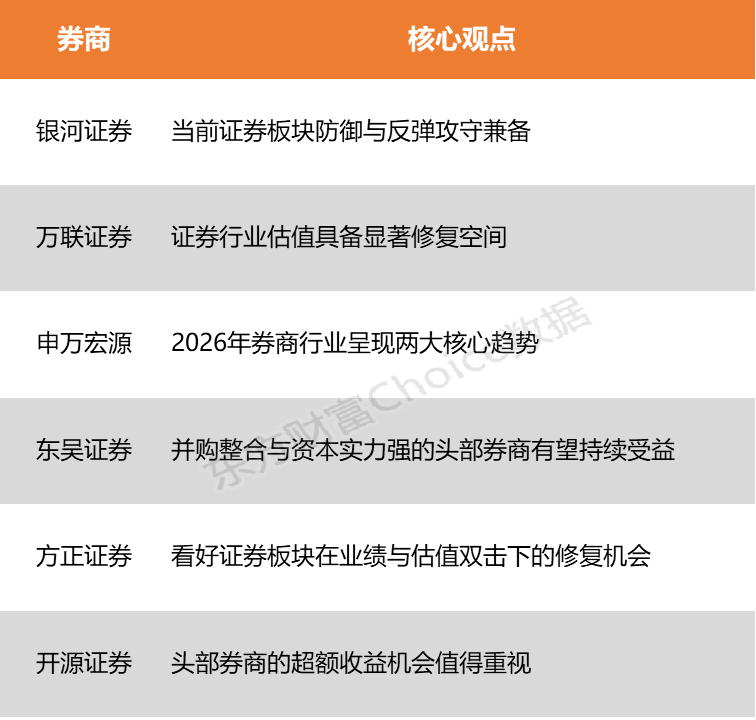 银河证券:当前证券板块防御与反弹攻守兼备 当前环境下中长期资金加速入市,市场活跃度维持高位,2026年资本市场延续“健康牛”态势确定性较高,财富管理转型、国际化业务拓展、金融科技赋能均有望成为券商行业提升ROE(净资产收益率)的驱动力。当前证券板块估值处于历史低位,防御与反弹攻守兼备。 万联证券:证券行业估值具备显著修复空间 证券行业基本面保持高景气,但估值与业绩深度偏离,具备显著修复空间。

四 | 国际业务拓展与投行跟投机制将抬升ROE中枢,推动券商从重资本模式向价值发现者转型。

五 |  申万宏源:2026年券商行业呈现两大核心趋势 2026年券商行业呈现两大核心趋势。一是行业集中度持续提升,上市券商净资产、归母净利润CR5分别升至41.1%和48.9%,马太效应显著。

六 | 二是板块正处于估值修复与转型共振窗口,产业资本密集增持回购,财富管理向买方投顾加速转型,AI赋能成为新引擎。 东吴证券:并购整合与资本实力强的头部券商有望持续受益 2019年以来监管对证券行业整合、一流投行建设的政策导向愈发清晰,行业资源持续向头部集中,2025年证券行业净利润CR5、CR10已分别达41%、64%,并购整合与资本实力强的头部券商有望持续受益。

七 | 方正证券:看好证券板块在业绩与估值双击下的修复机会 在市场成交活跃度提升背景下,券商经纪、净利息收入快速增长,财富管理业务基本盘稳固,看好证券板块在业绩与估值双击下的修复机会。 开源证券:头部券商的超额收益机会值得重视 当前头部券商业务结构不断优化,市占率持续提升,ROE中枢稳步抬升,但市场尚未对相关变化完成估值定价,同时目前券商行业估值、机构配置水平仍位于历史底部,因此头部券商的超额收益机会值得重视。 (本文不构成任何投资建议,投资者据此操作,一切后果自负。市场有风险,投资需谨慎。)(文章来源:东方财富研究中心)。

八 |
Current article:http://tuc7w4m.runtunpaixufenjuduishuang.pics/5oyz64/20260826/3172198.html
Published on:10:16:18





 发表于 05:18:28
 QQ好友和群
 QQ空间
QQ空间 腾讯微博
腾讯微博 腾讯朋友
腾讯朋友 收藏
收藏 支持
支持 反对
反对
 发表于 17:47:09


